

The Junior Account Manager Switch: Why You Met the Expert But Got the Trainee

Why You Met the Expert But Got the Trainee
You remember the pitch meeting. Of course you do. The agency’s senior strategist – maybe even the founder – sat across from you and laid out exactly how they’d turn your marketing around. They knew your industry. They asked the right questions. They made you feel like your business actually mattered to them.
You signed the contract feeling like you’d made a smart decision.
Then, about three weeks in, something shifts. The person who sold you on the whole thing? Gone. Your new day-to-day contact is someone called Emily or Jake who joined the agency a few months ago, fresh out of university (and I’ve seen this play out dozens of times). They’re keen, sure. But they’re learning on your budget.
Sound familiar? You were sold by the expert, then handed off to a junior. And here’s what bothers me about it: this isn’t a staffing issue. It’s not bad luck or poor timing. It’s the model. It’s how the agency was built to operate from the start. You’ve experienced one of the most common and frustrating patterns in marketing audit failures. And it’s not an accident. It’s by design.
How the Bait-and-Switch Works
This “bait and switch” is so common in the agency world that it has become an inside joke among agency veterans. The A-Team sells, the B-Team (or often the C-Team) delivers.
During my years running my own agency, I witnessed competitors land client after client with a simple but devastating formula. They’d send in their most experienced strategist to dazzle prospects with industry insights, technical expertise, and impressive case studies. Then, once the contract was signed, that same brilliant strategist would mysteriously disappear, replaced by whoever happened to be available, typically someone with a fraction of the experience.
This isn’t random. It’s fundamental to most agency business models.
As one former client explained after hiring me to fix their failing campaigns: “The marketing director who sold us was brilliant. But after we signed, we got handed off to someone who needed us to explain our industry to them. Every meeting felt like a training session – for them.”
The Economics Behind the Switch
The economics reveal why this pattern persists:
- Senior strategists or directors typically command £70,000-£120,000+ salaries
- Junior account managers often earn £20,000-£35,000
- Mid-level specialists generally fall somewhere in between
Agencies maximise profit by having expensive senior talent focus almost exclusively on sales and crisis management, while assigning the majority of actual client work to the most affordable staff possible.
During my time competing against larger agencies, I observed their playbooks firsthand. Their margins depend on leverage. Senior people sell and set strategy, juniors execute. If they reversed that (or did it the way they should), they’d be out of business in six months.
This practice is driven purely by profit motives. Junior employees command significantly lower salaries, allowing the agency to pocket the difference between what you’re paying and what it costs them to service your account.
Some agencies explicitly use client accounts as training grounds for junior staff; your marketing budget is essentially funding their professional development.
The Impact of Inexperienced Account Management
When you sign with a typical marketing agency, you’re sold on the expertise of their seasoned professionals. But in reality, your campaigns are likely being managed by:
- Recent graduates with minimal practical experience
- Junior staff juggling 15-20+ accounts simultaneously
- Employees who joined the agency just weeks or months ago
- Generalists applying the same templated approach to every client
Think about that for a moment. Your account, with its unique industry dynamics, competitive landscape, and specific business goals, is one of fifteen to twenty being managed by someone who may have been in the role for only a few months.
How much strategic attention can any individual possibly give when they’re spread across that many clients?
The 30% Turnover Problem
Here’s a number that should bother you: marketing agencies experience staff turnover rates of approximately 30% annually. That’s among the highest of any professional industry.
Think about what that actually means in practice. Nearly a third of the people at your agency won’t be there this time next year. The account manager who finally got up to speed on your business, who understood your seasonal patterns and knew which campaigns had been tested before? Gone. Off to a higher-paying corporate role or a competing agency. And all that knowledge about your account walks out the door with them.
So you get introduced to someone new. Again. You explain your business from scratch. Again. You go over your target audience, your products, which channels have worked, which haven’t, the compliance issues specific to your industry. All of it, for the third time in eighteen months.
And the whole time, you’re paying the same retainer. Full price for what is, essentially, someone’s on-the-job training.
I should be fair here: this isn’t always the agency’s fault in the way that some of the other practices I cover in this series are. People leave jobs. That’s reality. But the agency industry has built a model that makes this problem significantly worse than it needs to be. They invest in training junior staff, those staff gain enough experience to be useful, and then they leave for better-paid positions elsewhere. It’s a cycle that never stops.
The result? A constant expertise gap that sits right between you and the results you’re paying for. Your campaigns don’t get the continuity they need, your strategy keeps getting reset to zero, and you’re left wondering whether it’s even worth the effort of explaining everything to the next new face.
That last part is what really gets to me. You outsourced your marketing to save time. Instead, you’re spending hours re-onboarding people who should already know your business. At some point, you have to ask: what exactly am I getting value for here?
The Real Cost of the Skill Gap
When your campaigns are managed by staff without the promised expertise, the consequences are significant:
- Strategic opportunities go unidentified
- Platform-specific optimisations never happen
- Industry-specific nuances are missed
- Campaigns follow generalised “best practices” rather than tested strategies for your specific business
- Technical issues go undiagnosed
- Your budget funds someone else’s learning curve
This pattern often overlaps with the autopilot campaigns problem – inexperienced staff are more likely to set up campaigns and leave them running without the strategic insight needed for ongoing optimisation.
Free Download: Report by an Ex-Agency Owner
7 Alarming secrets marketing agencies hope you never discover
Download Free Ebook →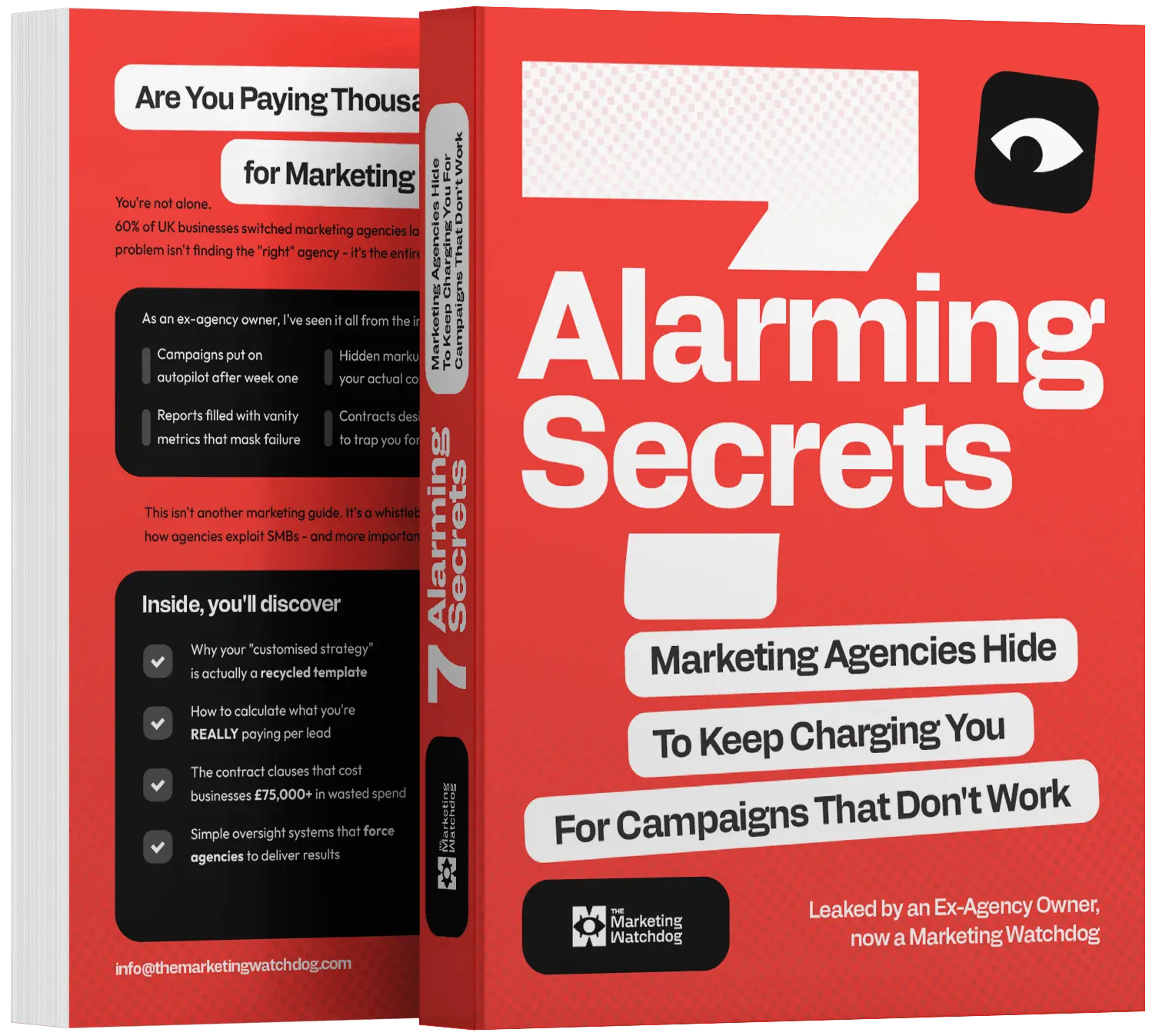
Warning Signs You’ve Been Switched
How do you know if you’ve fallen victim to the junior account manager switch? Here are the telltale signs:
Different contact after onboarding. The impressive strategist who won your business has been replaced by someone you’ve never met. The explanation usually involves vague references to “account management structure” or “team specialisation.”
Can’t answer industry-specific questions. When you ask about trends in your sector, competitive dynamics, or technical aspects of your business, your contact needs to “check with the team” or promises to “get back to you.” One agency I evaluated claimed deep e-commerce expertise during their pitch. But when I asked the assigned account manager specific questions about Shopify integration, they had to “check with the team” on basic functionality. It became clear they had one e-commerce specialist who did pitches while everyone else was learning on the job.
Generic advice that doesn’t fit your business. The recommendations you receive could apply to virtually any company. There’s no evidence of deep understanding of your specific market, customers, or competitive position.
Delayed responses and communication gaps. Your emails sit unanswered for days. Calls aren’t returned promptly. This often indicates your account manager is overwhelmed with too many clients to give yours proper attention.
Reports that read like templates. The monthly reports you receive could have been generated for any client with minor adjustments. There’s no strategic insight, just metrics without meaningful interpretation.
Wondering Who’s Really Managing Your Account?
I can help you evaluate whether you’re getting the expertise you were promised. Request a complimentary account review and get clarity on who’s actually working on your campaigns.
Request Your Free Account Review →
Protecting Yourself from the Switch
Having observed this pattern across hundreds of agency relationships, I’ve identified practical steps to protect your marketing investment:
Before You Sign
Insist on meeting your actual day-to-day account team before signing. If the agency resists, that’s a major red flag. One of my friends who runs a business in the events industry shared a brilliant approach: they specifically requested the LinkedIn profiles of every team member who would touch their account, then researched their actual experience before signing. The agency was noticeably uncomfortable, but couldn’t reasonably refuse.
Ask direct questions about experience levels. “How many years has this specific individual worked in this exact speciality? How many clients like me have they personally managed?” See the full list of questions for your account manager.
Investigate turnover patterns. “What’s your typical employee retention rate? How will you ensure continuity if my account manager leaves?”
Verify platform-specific credentials. For technical specialities like PPC or SEO, confirm that your account manager holds relevant certifications and has appropriate experience. If they manage your PPC, run through this Google Ads audit checklist to verify. It’s not a guarantor of success, but you at least know they’ve passed the theory.
Contract Protections
Request senior oversight guarantees in writing. Specify minimum involvement from the experienced strategists who impressed you during the sales process. Get this documented in your contract, not just promised verbally.
Include team continuity clauses. Establish what happens if your account manager leaves. Will you have approval rights over their replacement? What transition process will protect your campaigns?
Consider smaller specialist agencies. Boutique agencies focusing solely on your specific need often provide more consistent access to genuine expertise.
When to Escalate
If you’re already working with an agency and suspect the switch has occurred, don’t suffer in silence. Request a meeting with the senior strategist who sold you. Ask pointed questions about account oversight. If answers are evasive or unsatisfactory, it may be time to consider independent oversight or a new agency relationship.
For a deeper examination of the expertise gap and its impact on your campaigns, read about the staffing bait-and-switch and how to spot it.
You Hired Expertise, Not a Training Ground
No agency is going to tell you about this skills gap openly. Why would they? It threatens the entire way they make money. But once you understand how it works, you’re in a much stronger position the next time you sit across the table from them.
I’ll tell you something from the other side. When I started my own agency, I tried to do it differently. I kept myself involved in every account at a senior level because I knew that’s what clients were actually paying for. But here’s what I ran into: the agencies I was competing against were making promises I couldn’t match, not because I lacked the ability, but because those promises were never going to be kept in the first place. And clients fell for it. Repeatedly.
That sounds harsh. But it’s accurate.
The economics just don’t work in the client’s favour. Agencies need low-cost junior staff to protect their margins, whilst selling you on the experience of people who’ll never touch your account after the contract is signed. It was watching this play out over and over that eventually pushed me to stop running an agency altogether and start helping businesses see through it instead.
So here’s where I land on this: you have every right to know exactly who is managing your marketing. Not a job title on a proposal. An actual name, their experience, the number of other accounts they’re handling alongside yours. And if what you were sold doesn’t match what you’re getting? That’s not a misunderstanding. That’s a problem worth acting on.
Is Your Agency Delivering the Expertise You Were Promised?
Get Your Free Marketing Performance Assessment
I provide a comprehensive evaluation that examines not just your campaign performance, but the level of strategic expertise being applied to your account.
What You’ll Need to Provide:
- 3-6 months of recent marketing performance data
- Current agency contracts and reports
- Access to advertising platforms or reports (view-only is sufficient)
- Brief description of your key business objectives
My Assessment Guarantee: I provide a comprehensive written report regardless of whether you engage my ongoing services. This report alone typically identifies savings opportunities of 20-30% of current marketing spend.
Request Your Free Assessment →
This post is part of a comprehensive series on marketing agency accountability. Learn more about how campaigns on autopilot compound the expertise problem, or explore the full scope of the agency bait-and-switch.
Stop Guessing. Start Knowing.
Get your free marketing assessment and find out what's really happening with your agency spend.
Get in Touch →