
Is Your “Custom” Marketing Strategy Actually a Template?

The Coffee That Ruins It
You’re having a coffee with another owner. Different business, different sector, different agency entirely. Somewhere between the second cup and the bill, they show you their marketing strategy on their phone.
Same structure as yours. Same recommended channels. In places, near enough the same sentences.
That’s the moment most owners stop wondering and start counting.
To be clear about what I’m describing: agencies using a consistent framework is normal and often sensible. A firm that has run four hundred campaigns should have a method. What I mean is narrower and less defensible, which is the same document with your name typed over the last client’s.
I called it playbook mode when I ran an agency. The pitch is bespoke. Once the ink dries and the excitement fades, the work quietly reverts to whatever the firm does for everyone.
This page covers why it happens, and how to establish whether it’s happening to you. The second part is more useful than it sounds, because the evidence is usually sitting in the document itself.
What Your Retainer Actually Buys
Before the tells, the arithmetic, because it explains everything that follows and almost nobody does it.
Ask your agency what they charge per hour for work outside the retainer. Most will tell you without hesitation, because it’s a routine commercial question and they quote it regularly.
Then divide your monthly fee by that number.
Say the answer is thirty hours. Now subtract what’s already spoken for. Monthly reporting, a review call, internal admin, the email traffic. Six to eight hours gone before anyone touches a campaign. Call it twenty hours of actual work.
Against that, consider what genuine strategy work involves. Reading your sector properly. Studying four or five competitors’ actual marketing rather than their websites. Understanding your regulation, your buying cycle, your objections. That’s a solid week for someone senior.
A week of senior research is roughly two months of your entire allocation, spent before a single advert runs.
No agency does that at a small-business fee. Not because they’re dishonest, but because the sums don’t work, and they’d rather quietly reuse a template than tell you the price of the thing you actually asked for.
A marketing director once described the alternative to me plainly: “We have three standard campaign structures we apply to every client in this industry. We just change the logos, adjust the target audience settings, and update the ad copy. The entire setup takes us less than a day.”
Less than a day. That is the honest answer to what your strategy cost to produce.
Free Download: Report by an Ex-Agency Owner
7 Alarming secrets marketing agencies hope you never discover
Download Free Ebook →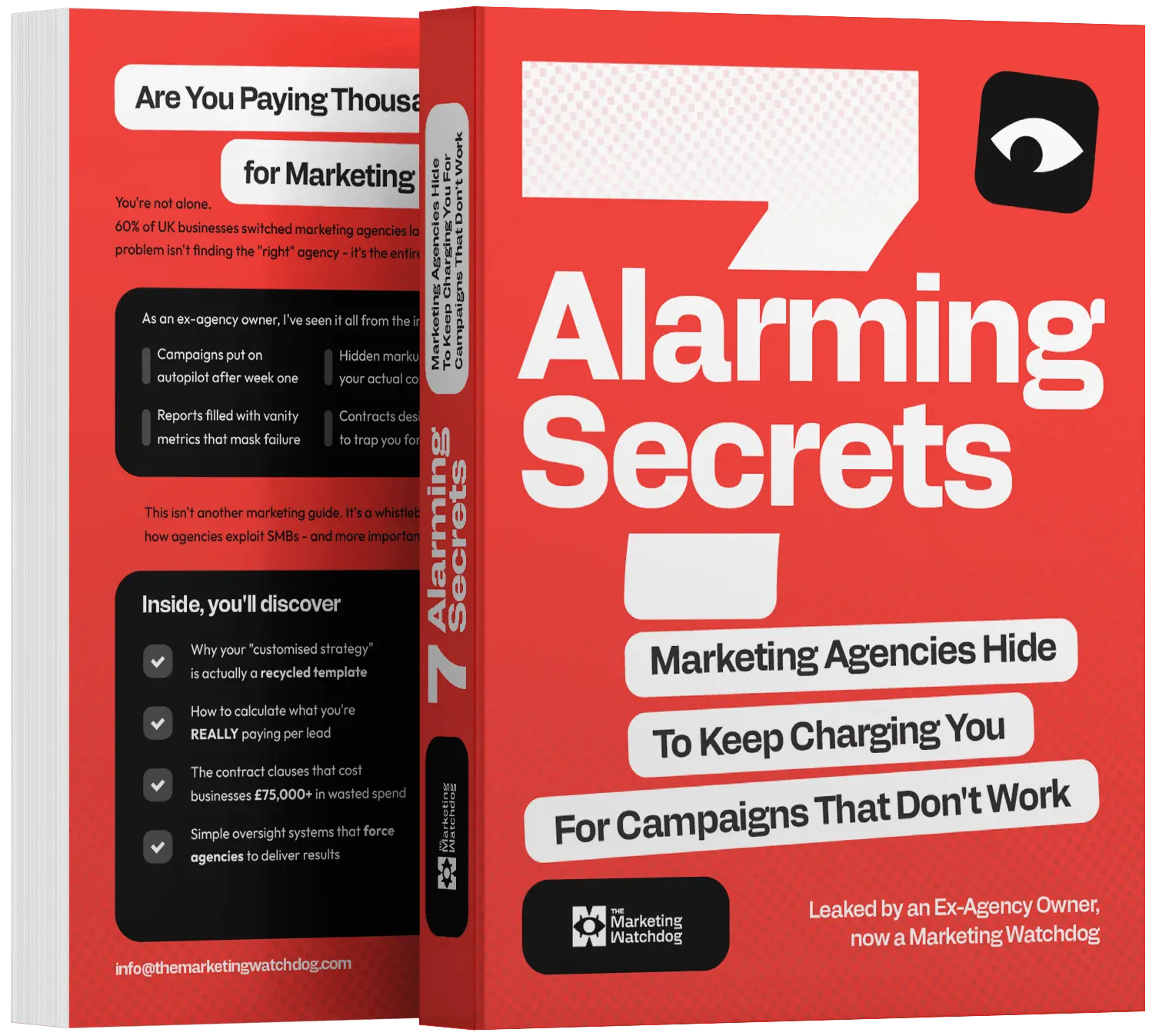
Four Ways to Test the Document
You don’t need to guess at any of this. Open the strategy and spend twenty minutes.
- Read the file properties. Every PDF and Word document carries metadata: author, creation date, sometimes an earlier filename. Right-click, then Properties or Get Info. A strategy described as three weeks of work, created the day before it landed, under a filename ending “v4-template”, has answered the question without anyone saying a word.
- Search a sentence. Take a distinctive line from the strategic rationale, put it in quotation marks, and search it. Agency blog posts, published case studies and other clients’ decks surface more often than you’d expect. Even a near match tells you where the paragraph came from.
- Count your own numbers. Go through and mark every figure that came from your business. Your conversion rate, your average order value, your seasonal split, your close rate. A genuine strategy is built on those. Templates contain industry averages and round numbers, because the writer didn’t have yours.
- Look for a name that isn’t yours. It sounds absurd until it happens. One owner told me his agency delivered a comprehensive strategy two days after a fifteen-minute discovery call, and had left another client’s name in one section. Search the document for the agency’s other clients. It costs nothing to check.
None of these require you to understand marketing. They require you to read a document carefully, which is a skill you already have and use on every other supplier you deal with.
What’s Missing Is the Real Tell
Here’s the thing I’d check before all four of those, and it takes about a minute.
Find where the strategy says what you will not do.
Choosing is what strategy is. A real one rules things out: a channel you’re abandoning, an audience you’re no longer chasing, a quarter where you spend nothing because your market isn’t buying. Those choices only get made by someone who knows your situation well enough to accept the cost of being wrong.
Templates never exclude anything. They recommend search and social and content and email, because recommending everything is safe and requires knowing nothing. A document with no exclusions in it hasn’t made a single decision on your behalf.
The related absence is competitors. A genuine strategy names three or four and says something specific about what each is doing. Not a positioning grid with your logo in the top right. Actual observations, of the sort you’d get from someone who spent an afternoon looking.
One manufacturing client put the pattern rather better than I can. Sitting through an agency webinar, he watched them present “the exact same social media strategy for a luxury spa that they had proposed for my industrial parts business.”
If You’ve Already Got One
Finding the template underneath doesn’t mean the relationship is finished. It means you now know what you’re buying, which changes the conversation usefully.
Don’t lead with the accusation. “This looks like a template” invites a defence and you’ll spend an hour on semantics. Ask instead: “Which parts of this were written specifically for us, and which come from your standard approach?” That’s a fair question with no good evasive answer.
Ask for the exclusions. “What are we deliberately not doing this year, and why?” If nobody can answer, the strategy hasn’t been written yet, whatever the document says.
Supply what’s missing yourself. This one surprises people. Most agencies producing generic work aren’t incapable, they’re unbriefed and under-resourced. Give them your close rate by channel, your seasonal split, the three objections your salespeople hear weekly, and the names of the competitors that actually cost you deals. Then watch whether the next quarter’s plan changes.
If it does, you’ve fixed the relationship for the price of an afternoon. If it doesn’t, you’ve learned something no argument would have told you, and the wider pattern of warning signs is worth reading properly at that point.
Before You Commission the Next One
Four questions, asked before signing, that a template-driven agency struggles with:
- “How many hours go into strategy for a new client, and who spends them?”
- “What will you need from me before you can write it?”
- “Which competitors will you research by name?”
- “When will I have it?” A strategy promised within days of signing was written before you arrived.
The fourth is the most revealing and the least confrontational. Real research takes time. An agency that can deliver on Friday what it hasn’t started on Tuesday is telling you where the document comes from.
If the strategy already exists but the sector knowledge behind it looks thin, that’s a separate problem with its own signs. And where senior people pitched the work but juniors are writing it, you’re looking at the staffing model rather than the strategy.
Send Me the Strategy Document
Free, written, and yours to keep either way.
What you receive:
- Which sections were written for you and which came from a house template
- What your retainer buys in hours, worked out from the agency’s own rate
- The decisions the document should contain and doesn’t
- A written specification your agency can work to, with the exclusions named
Often the fix is a better brief rather than a new agency. That’s the cheaper outcome and it’s the one I find most.
Stop Guessing. Start Knowing.
Get your free marketing assessment and find out what's really happening with your agency spend.
Get in Touch →